Pre-season is often seen as a time to blow off the cobwebs, improve fitness and get back to full sporting performance. However, it is also an important opportunity to prepare the body for the physical demands of the season ahead.
Following a period of reduced activity or rest, a sudden increase in training volume, intensity and sport-specific demands can place increased stress on muscles, tendons and joints. A gradual return to training can help the body adapt and may reduce the risk of preventable injury.
This is where prehabilitation, or “prehab”, can play an important role. A structured prehab programme can help athletes develop strength, mobility, movement control and sport-specific capacity before returning to full competition.
Why Does Prehabilitation Matter?
Prehabilitation takes a proactive approach to injury prevention. Rather than waiting for an injury to occur, the aim is to identify and address physical limitations that could affect an athlete’s ability to tolerate the demands of their sport.
After an off-season period, some athletes may experience changes in strength, mobility, conditioning or neuromuscular control. Returning to high-intensity training too quickly can place additional stress on tissues that have not yet adapted to those demands.
Research supports the use of structured injury-prevention programmes, with evidence suggesting that appropriate exercise-based programmes can reduce injury occurrence (Soligard et al., 2008).
Prehab is therefore about gradually building the physical capacity needed to train and compete consistently throughout the season.
What Should a Pre-Season Prehab Programme Include?
An effective programme should be tailored to the individual athlete, their previous injuries and the demands of their sport.
Strength Training
Progressive strength training is an important part of preparing the body for sport. Developing muscular strength and capacity can help athletes tolerate activities such as running, jumping, accelerating, decelerating and changing direction.
A systematic review by Lauersen et al. (2018) found that strength training was associated with a reduction in sports injuries, supporting its role in injury prevention.
Neuromuscular Training
Neuromuscular training focuses on movement control, coordination, balance and stability. Exercises may include landing mechanics, agility, balance and change-of-direction work.
These exercises can be particularly relevant to athletes whose sports involve repeated jumping, sprinting or rapid changes in direction.
Mobility and Sport-Specific Preparation
Mobility exercises can be incorporated where appropriate to support the movements required by an athlete’s sport. As pre-season progresses, training should also become increasingly specific to the demands of competition.
This may include sprinting, jumping and landing, running mechanics and change-of-direction drills.
The key is to progress these demands gradually, rather than exposing the athlete to full-intensity training before they are ready.
How Can a Sports Therapist or Physiotherapist Help?
Returning to sport following an off-season, injury or prolonged period away from training should be a gradual and well-managed process.
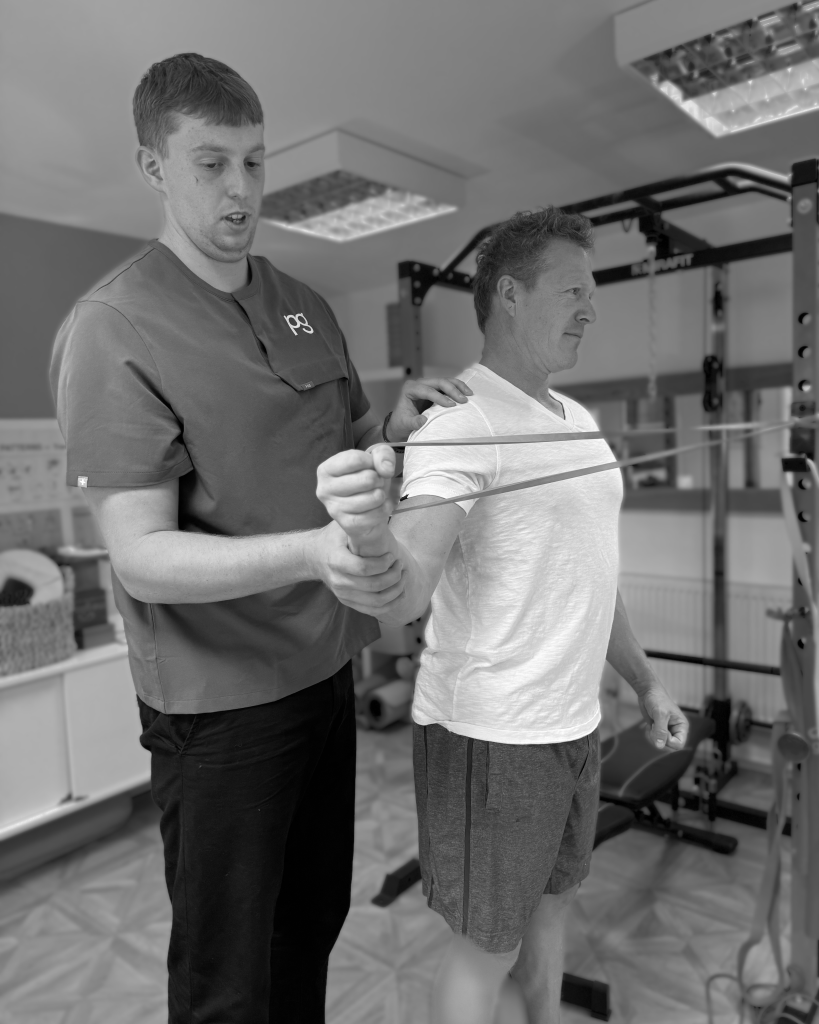
A sports therapist or physiotherapist can assess an athlete’s strength, movement, mobility and previous injury history, helping to identify areas that may benefit from further development.
An individualised programme can then be developed around the athlete’s sport and goals. This may include strength exercises, movement work, running progression, return-to-sport exercises and advice around training load and recovery.
Regular monitoring can also help ensure that training progresses appropriately as the athlete’s workload increases.
Sports massage may also form part of an athlete’s wider recovery strategy where appropriate, alongside strength training, rehabilitation and sensible training progression.
Sports Therapy and Physiotherapy in Stratton Audley and Cheltenham
Whether you’re returning to football, rugby, running or another sport, pre-season is a valuable opportunity to prepare your body for the demands ahead.
At Pea Green Physio, our sports therapy and physiotherapy services can support athletes with assessment, rehabilitation, strength and conditioning, and return-to-sport planning.
We work with athletes in Stratton Audley, Oxfordshire and Cheltenham, Cotswolds, helping individuals prepare for competition, manage training demands and address areas of concern.
If you’re returning from an injury, experiencing a recurring problem or simply want to improve your physical preparation before the season begins, an assessment with a sports therapist or physiotherapist can help you understand what your body needs.
Conclusion
Pre-season provides an opportunity to build a strong physical foundation before competition begins.
A structured prehabilitation programme can help develop strength, movement control and sport-specific capacity while allowing training demands to increase progressively. Combined with appropriate recovery and professional guidance, this may help reduce injury risk and improve an athlete’s ability to tolerate the demands of their sport.
Preparing properly before the season starts isn’t about guaranteeing an injury-free season. It’s about giving your body the best possible preparation for the demands ahead.
Author: Alex Johnson (Sports Therapist; Bicester & Cheltenham)
References
Gabbett, T. J. (2004). Incidence of injury in semi-professional rugby league players. British Journal of Sports Medicine.
Lauersen, J. B., Andersen, T. E., & Andersen, L. B. (2018). Strength training as superior, dose-dependent and safe prevention of acute and overuse sports injuries: a systematic review, qualitative analysis and meta-analysis. British Journal of Sports Medicine, 52(24), 1557–1563.
Soligard, T., et al. (2008). Comprehensive warm-up programme to prevent injuries in young female footballers: cluster randomised controlled trial. BMJ, 337, a2469.